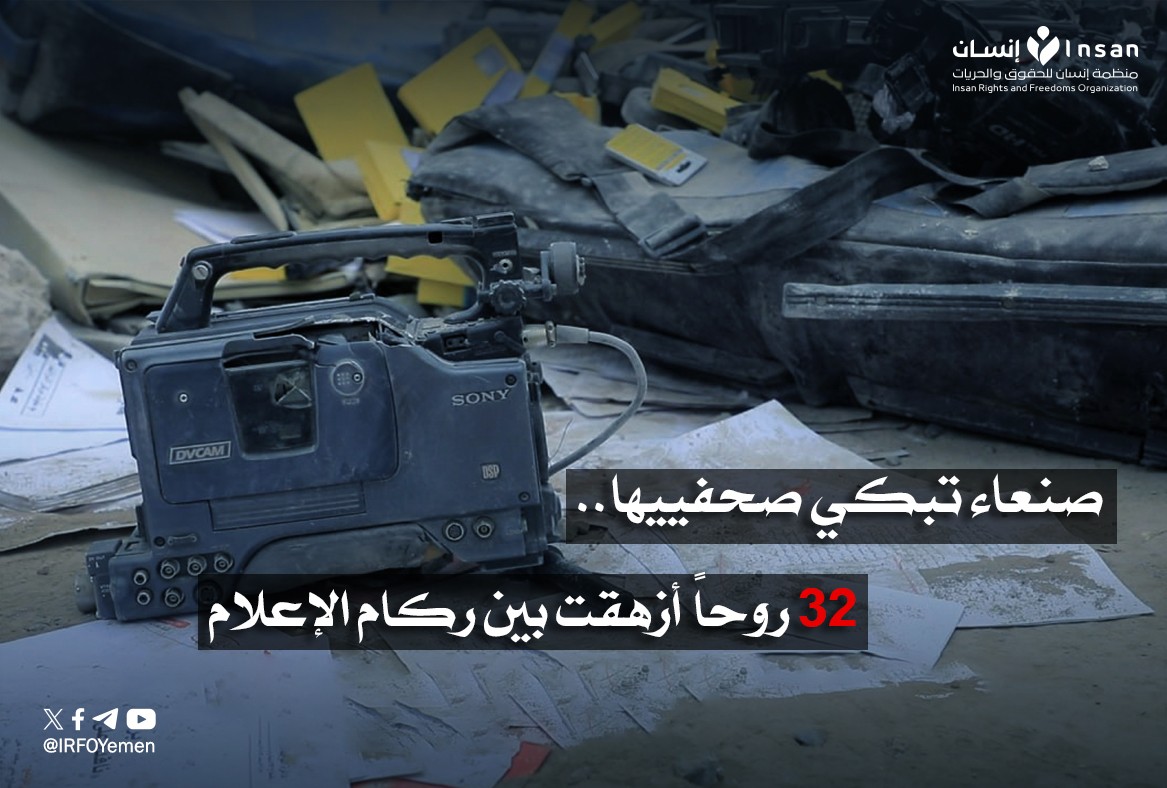
The curtain has fallen, and Sana’a has donned black today, Tuesday, as it bid farewell to 32 journalists at once.
The Yemeni capital awoke to a pain that will remain etched in memory.
How could it not, when just last Wednesday a new Israeli atrocity unfolded, as warplanes struck the heart of Sana’a, targeting the offices of 26 September Newspaper and Al-Yemen Newspaper in the densely populated Al-Tahrir district, packed with residents and shoppers—killing and wounding dozens in an instant.
The massacre did not stop at the press buildings; it extended to nearby homes, erasing the lives of entire families.
Some journalists had been waiting for the Yemen-Saudi Arabia football match to end so they could write their sports analyses, hoping to bring joy to the fans—only for the airstrikes to turn the excitement of journalistic work into a resounding tragedy.
Others were preparing reports on Israeli violations in Gaza, only to find themselves victims of the same aggression they had been documenting.
The human stories from the heart of the tragedy expose the world’s silence: a journalist talking with a colleague to coordinate the next piece, another speaking to his wife about household needs, a third thinking of his three daughters who were waiting for him—all of them perished under the rubble of the press buildings, leaving behind a vast emptiness and an enduring shock in the city.
The neighborhood that once witnessed ordinary daily life has now become an open graveyard in the middle of Al-Tahrir, a witness to a crime that tramples every law and international norm, while the world’s conscience continues its deadly silence.
The tragedy is compounded not only by the scale of the loss but by the absence of international action. The world that claims to champion freedom of the press and human rights has once again revealed its hypocrisy.
Had these journalists carried Western or Gulf nationalities, platforms would have overflowed with statements of condemnation. But the blood of Yemenis was met with silence—as if their lives were worth less in the scales of “selective humanity.”
The blood of 32 journalists, along with dozens of citizens killed in Israeli strikes that targeted two media institutions more than six decades old, now pleads with the world to act, condemn the crime, and hold the perpetrators accountable.
These lives are not mere numbers—they are open letters to the absent global conscience, urging it to awaken before repeated massacres consume every meaning of humanity.
Their blood cries out to the international community: enough silence over Israeli crimes nourished by American support—without which, every international prohibition would not have been so easily desecrated.