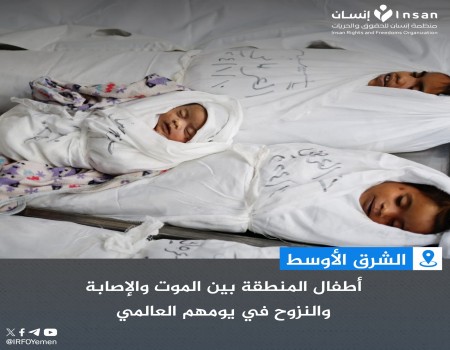

Yemen’s health tragedy is worsening under a heavy silence, leaving millions of lives facing disease without protection or any near hope.
According to data issued by the Ministry of Public Health and Environment in Sana’a, on the occasion of the World Day for Epidemic Preparedness, Yemen today is experiencing one of the most dangerous health and humanitarian crises in its modern history. With conflict and war continuing for years, nearly 13 million cases of communicable diseases have been recorded, along with approximately 1,800 deaths from the beginning of 2024 through the forty-fifth week of 2025.
The disaster does not stop at statistics. More than 20 million Yemenis are being deprived of their basic right to healthcare, amid the destruction of hundreds of medical facilities that have been forced out of service, in addition to a severe shortage of health workers, medicines, and medical supplies.
The Ministry of Public Health and Environment in Sana’a confirmed that more than 20 million Yemenis are denied basic healthcare due to the acute shortage of medical personnel, following the migration of thousands and the death of dozens over recent years.
It also noted that thousands of patients suffering from chronic illnesses—such as cancer, kidney failure, and diabetes—are facing what it described as a “slow death” as a result of interrupted treatment and the absence of life-saving medicines.
This grim reality has directly led to rising patient mortality rates, especially among children, worsening malnutrition, and the spread of epidemics in an environment lacking even the minimum requirements for prevention and treatment.
The Ministry warned that the continued collapse of the health system threatens not only Yemenis, but also poses regional and international risks, with increasing chances of cross-border disease outbreaks.
Amid this painful humanitarian scene, renewed calls are being made for urgent international intervention to support Yemen’s health system, provide funding and medical supplies, and strengthen preparedness to confront epidemics—before the crisis turns into an uncontrollable catastrophe.
What is happening in Yemen today is not merely a health crisis, but a comprehensive humanitarian tragedy, paid for by millions of civilians, while the world continues to watch—at a time when saving lives has become a moral responsibility that can no longer be delayed.