This year’s International Day in Support of Victims of Torture comes as the suffering of thousands of victims around the world continues, with their bodies and memories still bearing the scars of torture and abuse. The suffering of Palestinian prisoners stands out as one of the harshest examples of these violations, as their stories after release become living testimonies to what they endured behind the bars of Israeli prisons.
The freedom journey that Palestinian journalist Mujahid Bani Mufleh had long awaited was not the end of his suffering, but rather the beginning of a new chapter of pain and struggle for survival. After spending long months in administrative detention inside Israeli prisons, he was released exhausted, with his body weakened by hunger and illness. Just two days after his release, he suffered a severe brain hemorrhage that nearly claimed his life.
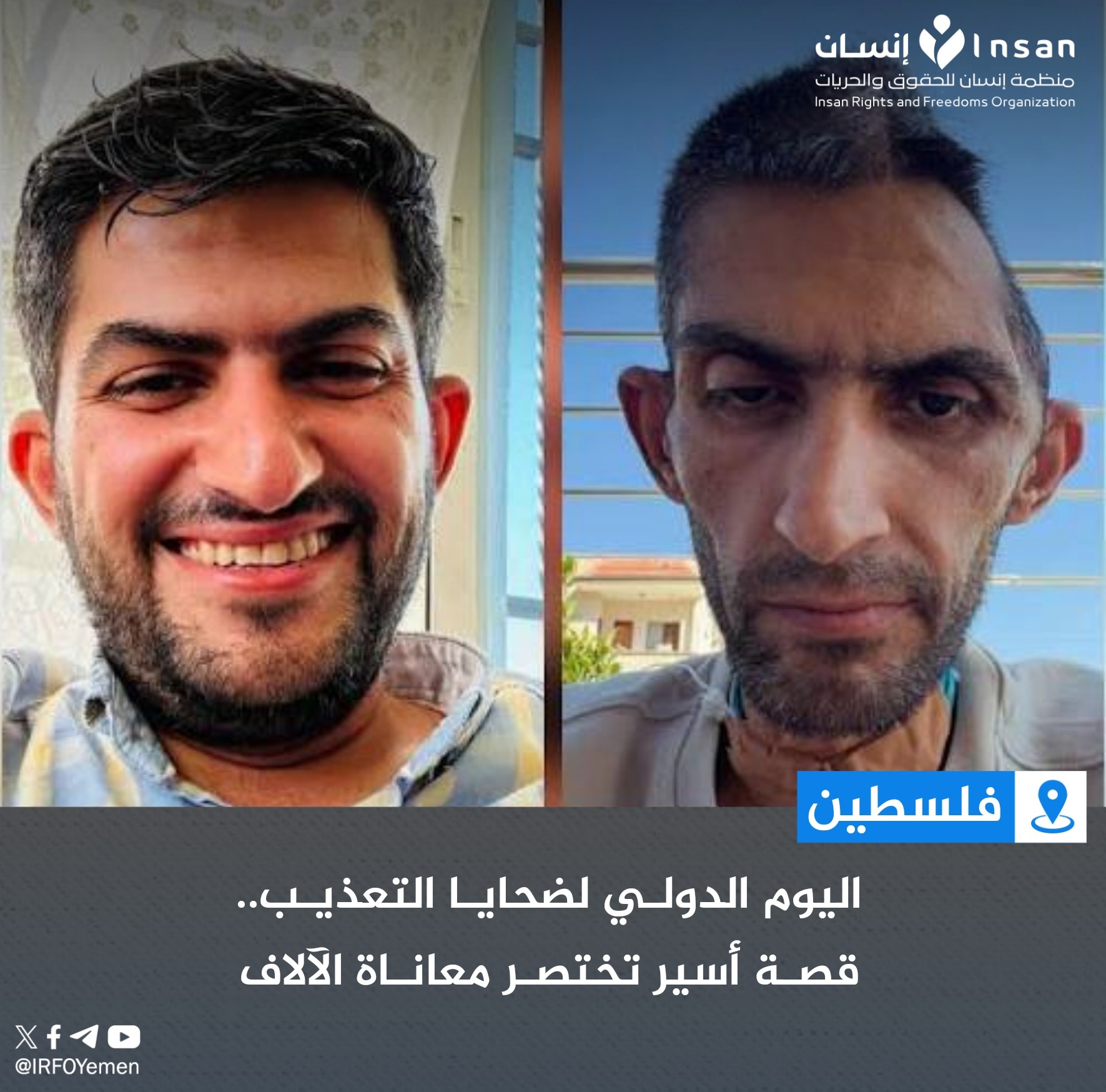
Photos documenting his health condition after undergoing complex surgeries sparked widespread shock. He appeared to have lost a large portion of his skull as a result of the serious abuses he endured inside the Israeli detention facility, in a scene that reflected the extent of suffering Palestinian prisoners may face inside prisons.
Bani Mufleh spent nearly fourteen months between detention and the medical treatment that followed. During his imprisonment, he endured harsh conditions including beatings, starvation, medical neglect, and mistreatment, which led to a severe deterioration in his health.
The Palestinian journalist underwent a series of complex surgeries to save his life. The images he later published revealed the scale of the tragedy he had lived through, with surgical scars clearly visible on his head — a scene that shocked many and once again drew attention to the suffering of Palestinian prisoners inside Israeli prisons.
But behind those images lies a story greater than the visible wounds — the story of a man who returned from detention with a body burdened by pain and a memory crowded with harsh details.
Mujahid spoke about the hunger and beatings he experienced in prison, not as a passing feeling, but as a harsh daily reality in which even a piece of bread became a distant dream.
He also spoke about the humiliation of losing control over the simplest details of one’s life under torture by Israelis, and about long nights in which pain shared his bed while fear accompanied him until morning.
The Palestinian Prisoners’ Club believes that what Bani Mufleh experienced is not an isolated or exceptional case, but rather a model reflecting the condition of thousands of Palestinian prisoners who have left Israeli prisons with severe physical and psychological conditions as a result of torture, starvation, denial of medical treatment, and ongoing assaults. Many stories remain trapped in fear and silence, while some prisoners die after their release due to the suffering they endured behind the bars of Israeli occupation prisons.
Today, former prisoner Mujahid Bani Mufleh stands as a living witness to the harsh physical and psychological effects left by Israeli prisons, in a story that encapsulates the suffering of thousands of Palestinian prisoners who face a daily battle for survival behind bars.